![mySidewalk_Logo_2_Color-2.png]](https://help.mysidewalk.com/hs-fs/hubfs/mySidewalk_Logo_2_Color-2.png?height=40&name=mySidewalk_Logo_2_Color-2.png)
Sidekick can help you compare your community to peer jurisdictions, regional neighbors, or national averages using data from the mySidewalk data library. By benchmarking key metrics, you can identify where your community excels, where you're falling behind, and what you can learn from similar places facing comparable challenges.
When to use this capability
Use Sidekick's comparative analysis capabilities when you need context for your local data or want to understand how your community stacks up against others. This is essential for strategic planning, setting realistic goals, identifying best practices, and making the case for change.Example use cases
- Preparing strategic plans with goals informed by peer performance
- Writing competitive grant applications that demonstrate need or opportunity
- Responding to "how do we compare?" questions from leadership or media
- Identifying communities to learn from or partner with
- Understanding whether local challenges are unique or part of broader patterns
- Setting performance targets based on what similar communities have achieved
- Making the case for investment by showing gaps relative to peers
Example questions and responses
User Query: How does housing affordability in Austin, TX compare to peer cities like Denver, Nashville, and Portland?
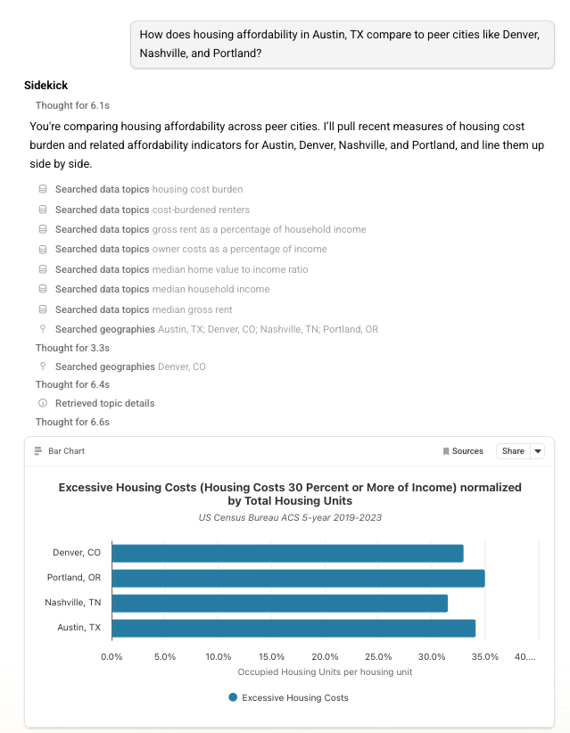
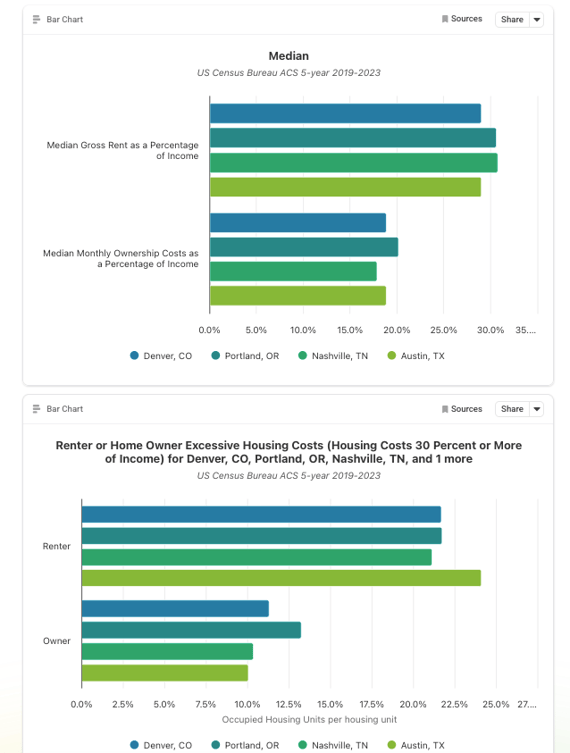
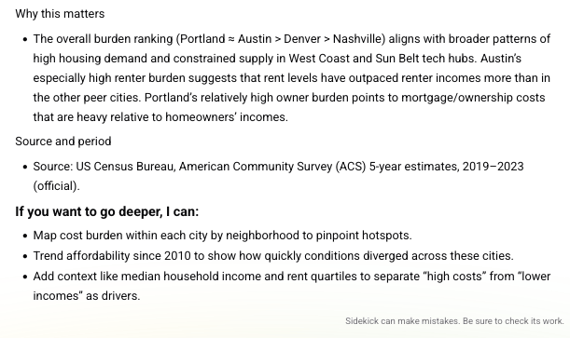
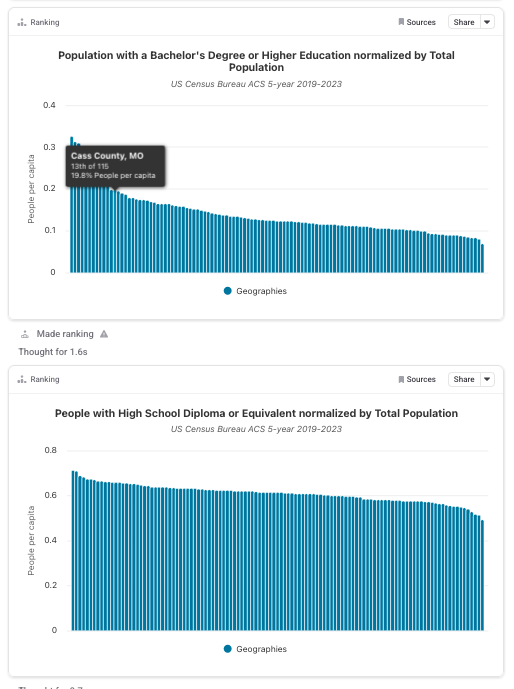
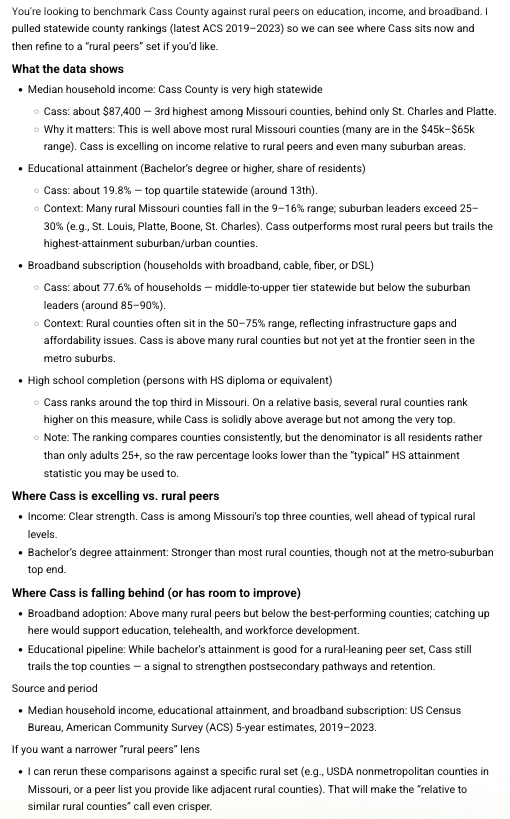
User Query: Compare Cass County, MO to similar rural counties in the state on education outcomes, median income, and broadband access. Explain where we're excelling and where we're falling behind.
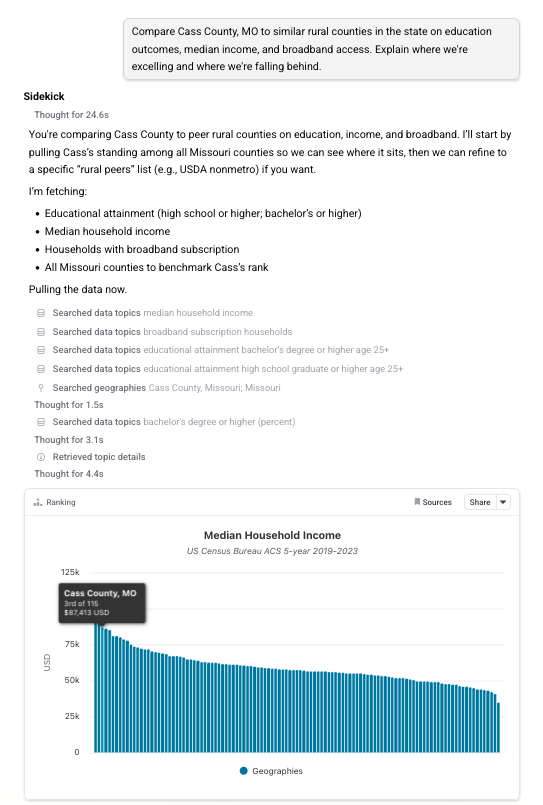
Advice for effective prompting
To get the most effective comparative analysis from Sidekick:
- Be specific about your comparison group. Clearly define who you want to compare to: "peer cities," "neighboring counties," "similar-sized communities," "the state average," or "the national average." You can also name specific jurisdictions: "Compare us to [City A], [City B], and [City C]."
- Specify the metrics that matter. List the key performance indicators you want to compare: "Compare us on housing affordability, median income, and employment rate" is more effective than "Compare our economic conditions."
- Use the "compare and explain" format. Try prompts like: "Compare [our place] to [peer group] on [metrics]. Explain where we're excelling and where we're falling behind."
- Ask for context about the comparison. Request Sidekick to explain what the differences mean: "What does this comparison tell us about..." or "Why might these differences exist?"
- Consider multiple comparison points. You can compare against several reference groups simultaneously: "Show me how we compare to peer cities, the state average, and the national average."
- Look beyond single metrics. Ask for comparisons across multiple related indicators to get a fuller picture: "Compare us on all available housing metrics" or "Look at economic development indicators."
- Request rankings when helpful. For larger comparison groups, ask: "Rank these communities by [metric]" or "Where do we fall in this comparison?"
- Identify learning opportunities. Ask follow-up questions like: "Which peer community is performing best on [metric] and what might we learn from them?"
- Check definitions and time periods. Review Sidekick's work to ensure all communities are being measured using the same definitions and data years for a fair comparison.
- Consider population-adjusted metrics. When comparing communities of different sizes, use rates, percentages, or per capita figures rather than raw counts.
Types of comparisons to consider
When benchmarking your community, consider comparing to:
- Similar-sized communities - Places with comparable populations
- Geographic peers - Neighboring jurisdictions or communities in your region
- Economic peers - Communities with similar economic profiles or industries
- Aspirational peers - Places you want to be more like or learn from
- Historical competitors - Communities you historically compare yourself to
- State/national averages - Broader context for your performance
- Demographic peers - Communities with similar population characteristics
- Functional peers - Places facing similar challenges (college towns, port cities, etc.)