![mySidewalk_Logo_2_Color-2.png]](https://help.mysidewalk.com/hs-fs/hubfs/mySidewalk_Logo_2_Color-2.png?height=40&name=mySidewalk_Logo_2_Color-2.png)
Sidekick can help you identify and analyze trends over time using historical data from the mySidewalk data library. You can explore how metrics have changed across different time periods, compare trends between geographies, and understand the trajectory of key community indicators.
When to use this capability
Use Sidekick's trend analysis capabilities when you need to understand how conditions in your community have evolved over time. This is particularly valuable for tracking progress toward goals, understanding long-term changes, and making data-informed decisions about future investments.
Example use cases
- Tracking progress on strategic plan goals or performance indicators
- Understanding demographic shifts and population changes over time
- Analyzing economic trends like employment, income, or housing costs
- Identifying emerging public health concerns or improvements
- Evaluating the impact of programs, policies, or investments
- Preparing grant applications that require historical context
Example questions and responses
User Query: How has the unemployment rate in Denver changed over the last 10 years? 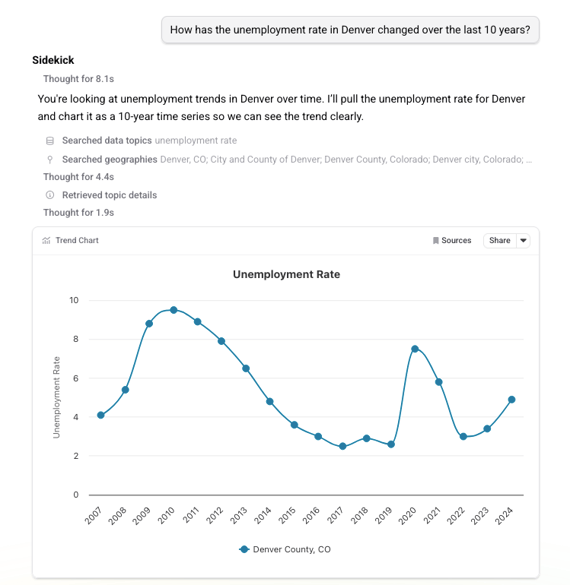
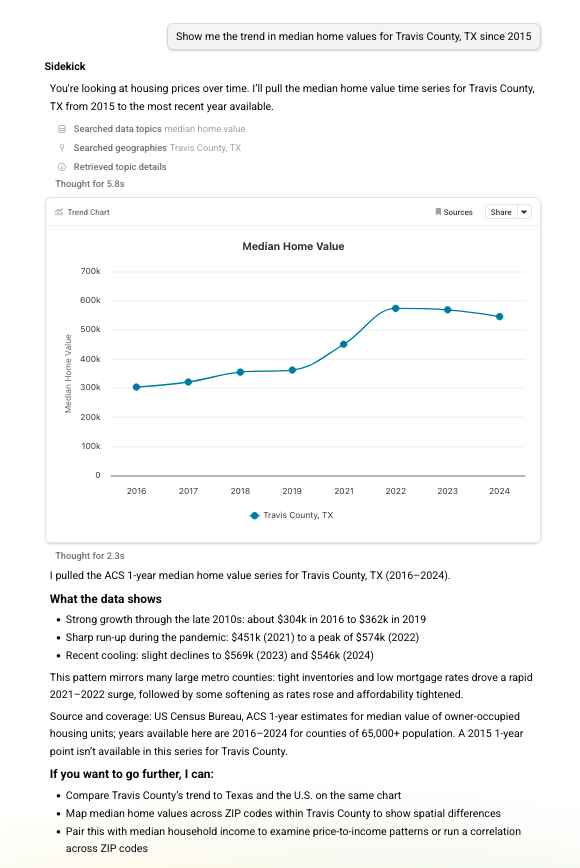
User Query: Show me the trend in median home values for Travis County, TX since 2015
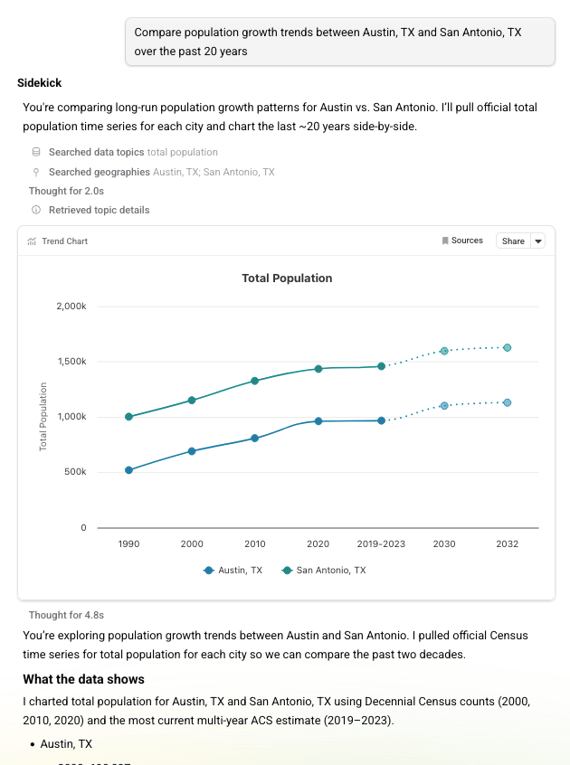
User Query: Compare population growth trends between Austin, TX and San Antonio, TX over the past 20 years
Advice for effective prompting
To get the most accurate, relevant trend analysis from Sidekick:
- Share context about what you're trying to accomplish. Let Sidekick know why you're asking or how you'll use the information—for example, "I'm preparing for a board meeting" or "I'm writing a grant application about housing needs." This helps Sidekick tailor the analysis and output to your specific use case.
- Be clear about what you want in the output. If you need specific elements like visualizations, comparisons to peer communities, or a particular format, mention them upfront. For example, "Show me a chart comparing our trends to similar cities" or "I need talking points I can present to stakeholders."
- Provide relevant details when you have them. While Sidekick can work with vague questions, sharing specifics—like timeframes, particular neighborhoods, or demographic groups you're interested in—helps get you to useful insights faster.
- Have a conversation. Follow up with questions to dig deeper, explore what's driving a trend, compare to other places, or refine the analysis. Sidekick builds on previous responses and remembers your context.
- Verify the details. Review the data sources, time periods, and geographies Sidekick used to ensure they match your needs. See Checking Sidekick's Work for more information.